
Case Study: Waiting
From Startup to Success - Jason Reynolds always wanted to be his own boss. After a decade in the automotive industry, he decided to take a leap and start his own manufacturing company, Reynolds Industrial Plastics, in 1998. His company specialized in producing custom plastic components for medical devices, a niche market with strong demand.
The early years were grueling. Jason learned to manage cash flow, hire reliable employees, and navigate the complexities of supply chains. Over time, he refined operations, secured key contracts, and positioned the company as a leader in its space. By 2018, Reynolds Industrial Plastics had reached its peak with $6 million in revenue and $950,000 in EBITDA. Jason also purchased the facility his business operated from, which further strengthened his financial position.
A Comfortable Plateau - For several years, the company remained strong, but growth stalled. Jason wasn’t concerned; after all, the business was still highly profitable. He continued reinvesting, taking out loans for new equipment that wasn’t essential but seemed like a good long-term investment. What Jason didn’t realize was that he had already reached the plateau phase of the business lifecycle—a stage where many owners believe they can push for another peak when, in reality, they are approaching a decline…
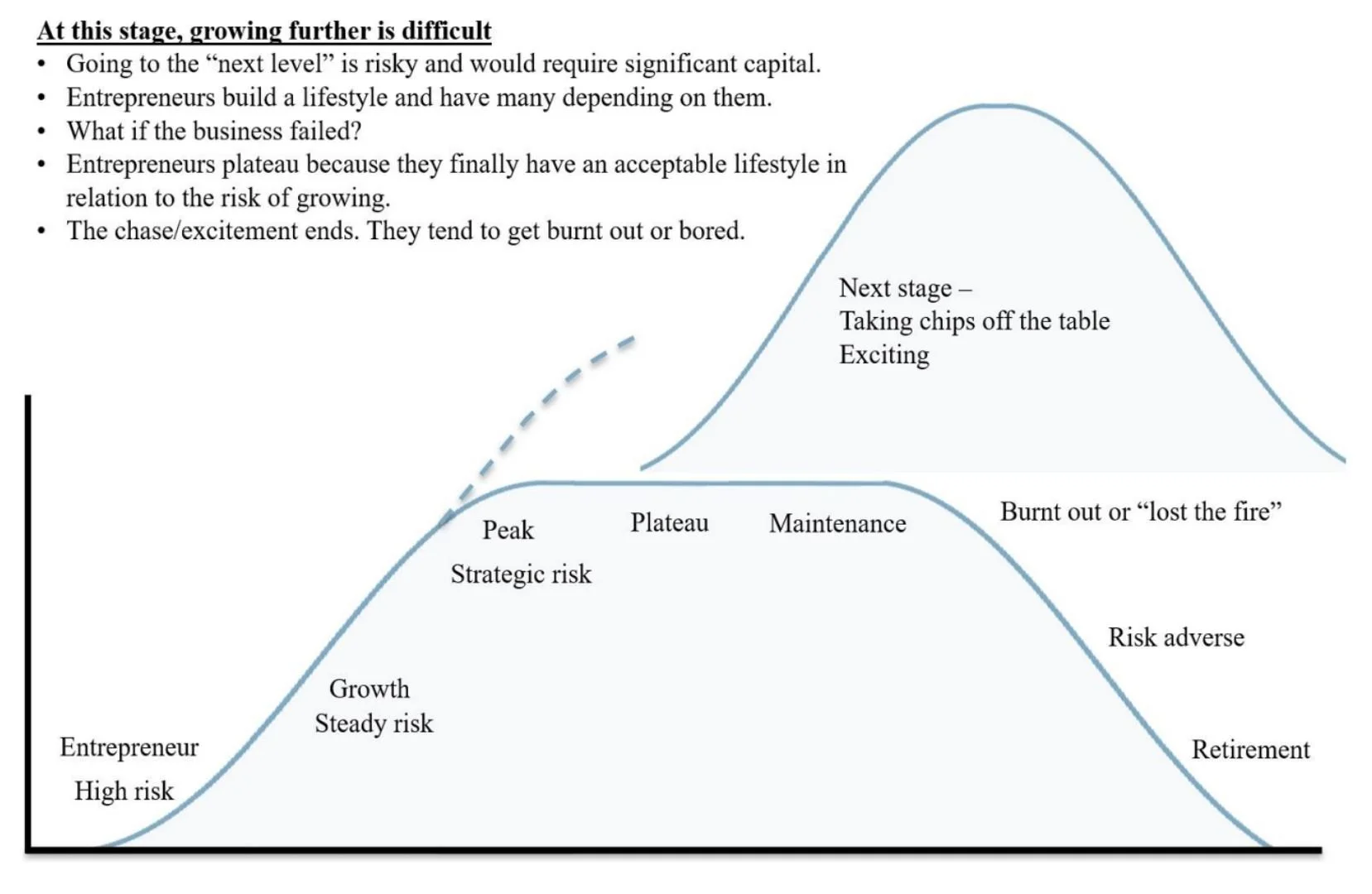
Instead of recognizing this moment as an ideal time to sell, Jason continued to operate as usual. His focus shifted from aggressive expansion to maintaining his lifestyle. He wasn’t tracking the business’s valuation or considering an exit plan.
The Downturn Begins - By 2021, small cracks in the business began to appear. Supply chain disruptions caused by global shortages made fulfilling orders difficult. Long-time customers of Reynolds Industrial Plastics started seeking alternative suppliers. Jason found himself increasingly frustrated with operational challenges. Then, in 2023, an accident on the factory floor resulted in a lawsuit from a long-time employee. Legal costs and rising insurance premiums began to erode profits. Meanwhile, Jason’s wife urged him to slow down, as health concerns made running the business more stressful than ever.
Now, in 2025, Jason is finally ready to sell. However, he’s facing his worst year on record. Revenue has dropped below $4 million, and the EBITDA is just half of what it used to be. Buyers are concerned about the negative trajectory, the pending lawsuit, and the weakening industry conditions. When the business was valued, another issue surfaced: Jason had never charged his company fair market rent for the real estate he owned, which artificially inflated EBITDA. Once adjusted, the business’s value took another hit. Instead of the $3.5 million he could have secured a few years earlier, the business is now worth just $1.2 million.
The Lesson: Know Where You Are on the Curve - Jason’s story follows the classic business lifecycle curve—a bell-shaped curve where companies grow, plateau, and eventually decline. Many business owners mistakenly assume they’re still in the growth phase when they have already entered the plateau. The best time to sell is before the decline begins, not after it is in full effect.
Had Jason sold at his peak or during the plateau years, he could have structured a deal to stay on as a consultant, earning a healthy salary while transitioning the company to new ownership. Instead, he is burnt out, facing legal and operational challenges, and selling for a fraction of what he once could have earned.
We encounter many business owners in this situation, seeking growth but reluctant to take the high risks necessary to achieve it. They have built a great lifestyle, maintain solid income, and many people depend on them. These owners often become bored or burnt out, then plateau (possibly for years), decline, and subsequently seek a sale, believing their business’s value is at or near its peak revenue and profitability. Buyers notice these signs and start circling the waters.
A Wake-Up Call for Business Owners - Most business owners regularly check their personal investments, home values, and retirement accounts. Yet, they rarely obtain a professional valuation of their business, which is their most valuable asset. A good business broker should provide an annual valuation, market insights, and strategies to enhance business value before it’s time to sell.
CPAs and attorneys can give advice, but only a professional business broker or M&A advisor understands real-world market conditions, buyer behaviors, and the factors that influence business value positively or negatively. The best time to understand your business’s worth isn’t when you’re forced to sell, it’s years before, when you still have options.
Not ready to retire? Many buyers wish to retain the seller for years after closing. Sometimes, they offer equity or a substantial salary. Buyers inquire about what sellers enjoy doing in the business and often tailor their employment agreements accordingly. By selling your business, you can eliminate most financial risks, earn a nice yearly salary, and potentially have a second chance at equity. It’s a win-win.